Custom Built Websites

Fenway Web by Boston Made builds custom, high-performance websites rooted in Boston’s creative grit to help brands grow online.

Author: Fenway Web

Fenway Web January 17, 2026

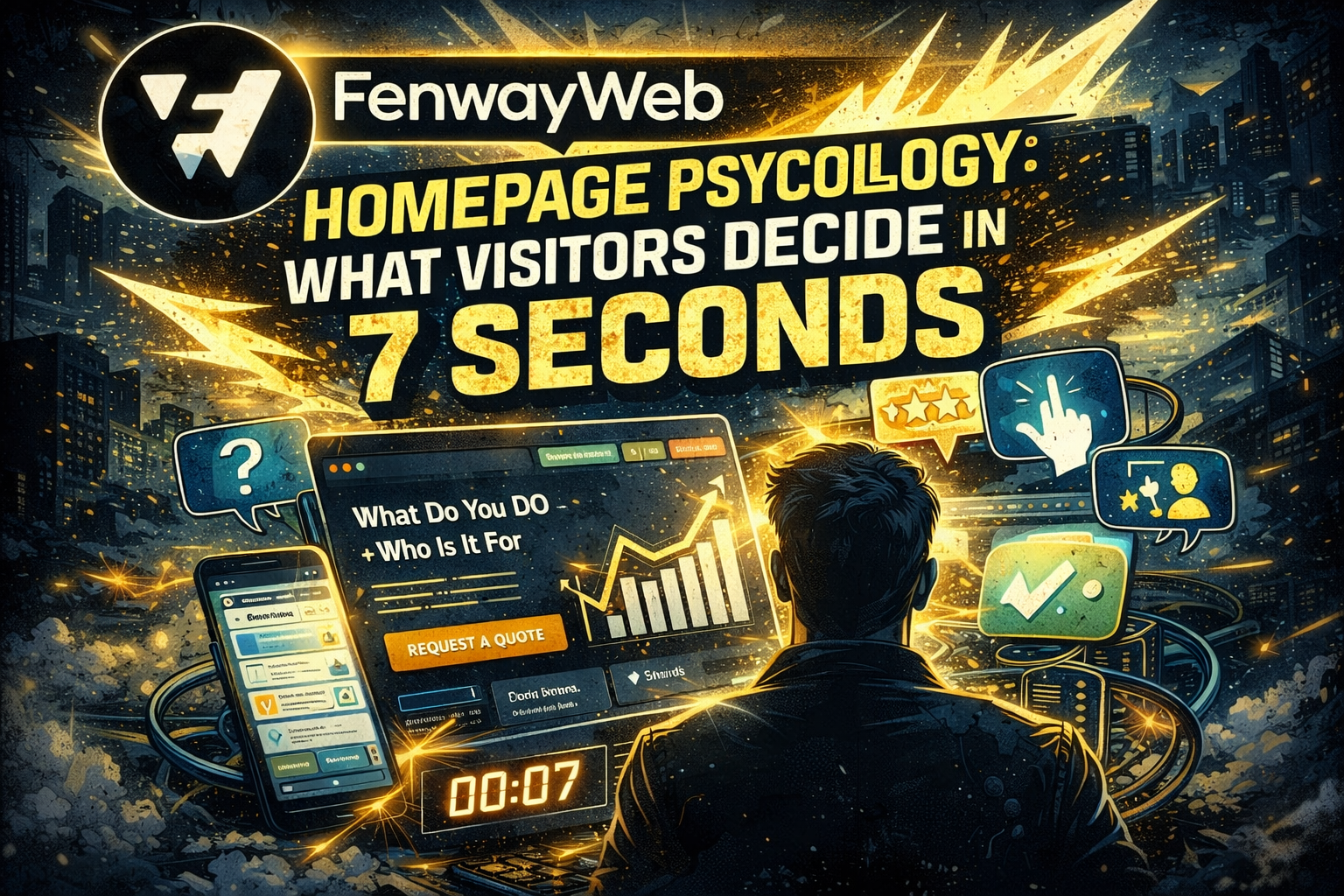
Homepage Psychology: What Visitors Decide in 7 Seconds

Most visitors decide what they think about your business within 7 seconds — which means your homepage isn’t just design, it’s psychology. In this blog, Fenway Web breaks down what visitors instantly judge (clarity, credibility, confidence, convenience, and next steps), and explains the homepage structure that consistently converts: hero clarity, proof-first design, organized services, a strong “how it works” process, trust-driven storytelling, and a closing CTA that turns scrolling into action.

Fenway Web January 16, 2026

The 5-Page Website Framework That Wins Locally

Most local business websites fail not because they look bad, but because they lack structure. In this blog, Fenway Web breaks down the 5-page website framework that consistently generates leads and builds trust: Home, Services, About, Portfolio/Results, and Contact. Learn what each page must accomplish, how it supports SEO, and why a simple, organized foundation is the fastest path to predictable digital growth.

Fenway Web January 15, 2026

What Businesses Get Wrong About “Mobile-Friendly”

Most businesses claim their website is “mobile-friendly,” but in 2026 that simply means it doesn’t break on a phone — not that it converts. In this blog, Fenway Web explains why mobile-first design is critical for SEO, trust, and lead generation. Learn the difference between mobile-friendly and mobile-optimized, what mobile visitors actually do, why thumb-zone CTA placement matters, how mobile speed impacts ranking and bounce rate, and how to design a mobile website that feels effortless and high-performing.

Fenway Web January 14, 2026

SEO Isn’t Keywords — It’s Structure

Most businesses think SEO is about keywords, but the websites that rank consistently are simply structured better. In this blog, Fenway Web explains why SEO is really digital architecture — built on site hierarchy, service page strategy, internal linking, topic clusters, clean URLs, header structure, schema markup, and technical performance. Learn why random content doesn’t rank, how Google rewards organized websites, and how to build an SEO system that compounds over time.

Fenway Web January 13, 2026

The 2026 Local SEO Blueprint (Google Maps + Organic Together)

Local SEO in 2026 is no longer about quick keyword tricks — it’s a connected ranking system that combines Google Maps visibility and organic search authority. In this blog, Fenway Web breaks down the complete local SEO blueprint: Google Business Profile optimization, NAP consistency across directories, review systems, service and location page structure, internal linking, buyer-intent content clusters, and user experience signals that Google measures. Learn how to rank higher, get more calls, and dominate your town online long-term.

The Content Engine — How to Turn One Idea Into 12 Pieces of Content

Most businesses burn out on content because they believe they need a brand-new idea every time they post. In this blog, Fenway Web introduces the “Content Engine” — a system that turns one strong idea into 12+ pieces of content, including pillar blogs, micro blogs, social posts, reels, lead magnets, newsletters, and FAQs. Learn how to stay visible consistently, build authority, fuel SEO, and generate leads without running out of topics or energy.

Landing Pages vs. Websites — Knowing the Difference Changes Everything

Most marketing fails not because businesses lack traffic, but because they send traffic to the wrong destination. In this blog, Fenway Web explains the critical difference between websites and landing pages: websites are brand hubs built for exploration, while landing pages are conversion weapons built for one focused action. Learn why ads should rarely go to the homepage, what elements every high-performing landing page needs, and how landing pages strengthen websites to create measurable ROI.

Why Most Websites Fail at Trust

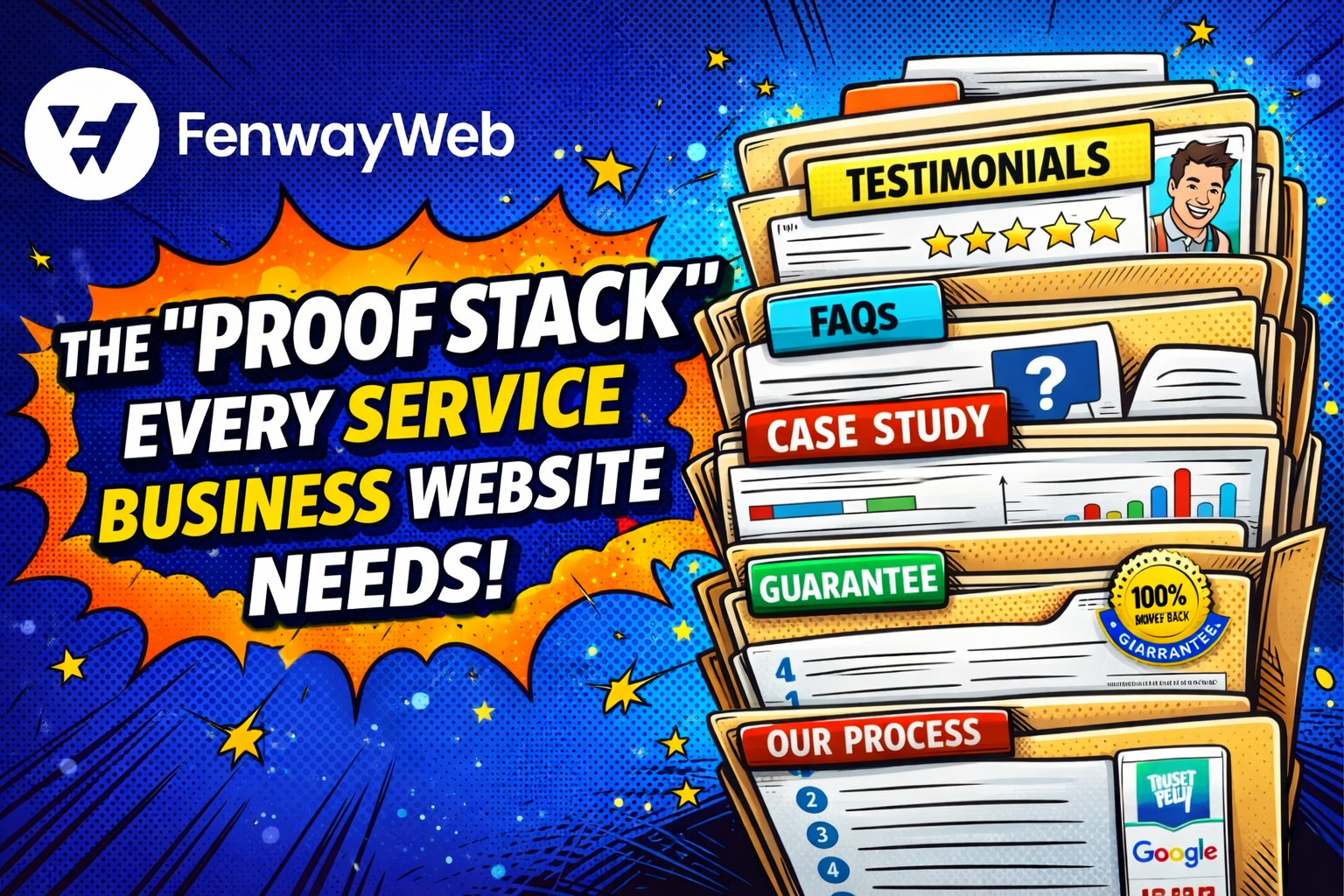
Most websites don’t fail because they’re ugly — they fail because visitors don’t trust them. In this blog, Fenway Web breaks down the invisible trust problem that kills conversions even with strong traffic. Learn the 3 levels of trust (visual trust, social proof trust, and operational trust), the biggest trust killers like vagueness and missing proof, and the “trust blocks” high-performing websites use to turn clicks into calls. Because in 2026, traffic doesn’t create growth — trust does.